#TwoMinuteTeardown: Corporate Systems Engineering SSHAAC00-S041911
Corporate Systems Engineering SSHAAC00-S041911
Electric utilities can employ “load shed” devices throughout their grid to manage load. These devices are usually found on air conditioners, water heaters, pool pumps and other large electrical loads. Typically they’ll offer you a small financial incentive to allow the utility to cycle your device off for short periods of time during peak demand events.
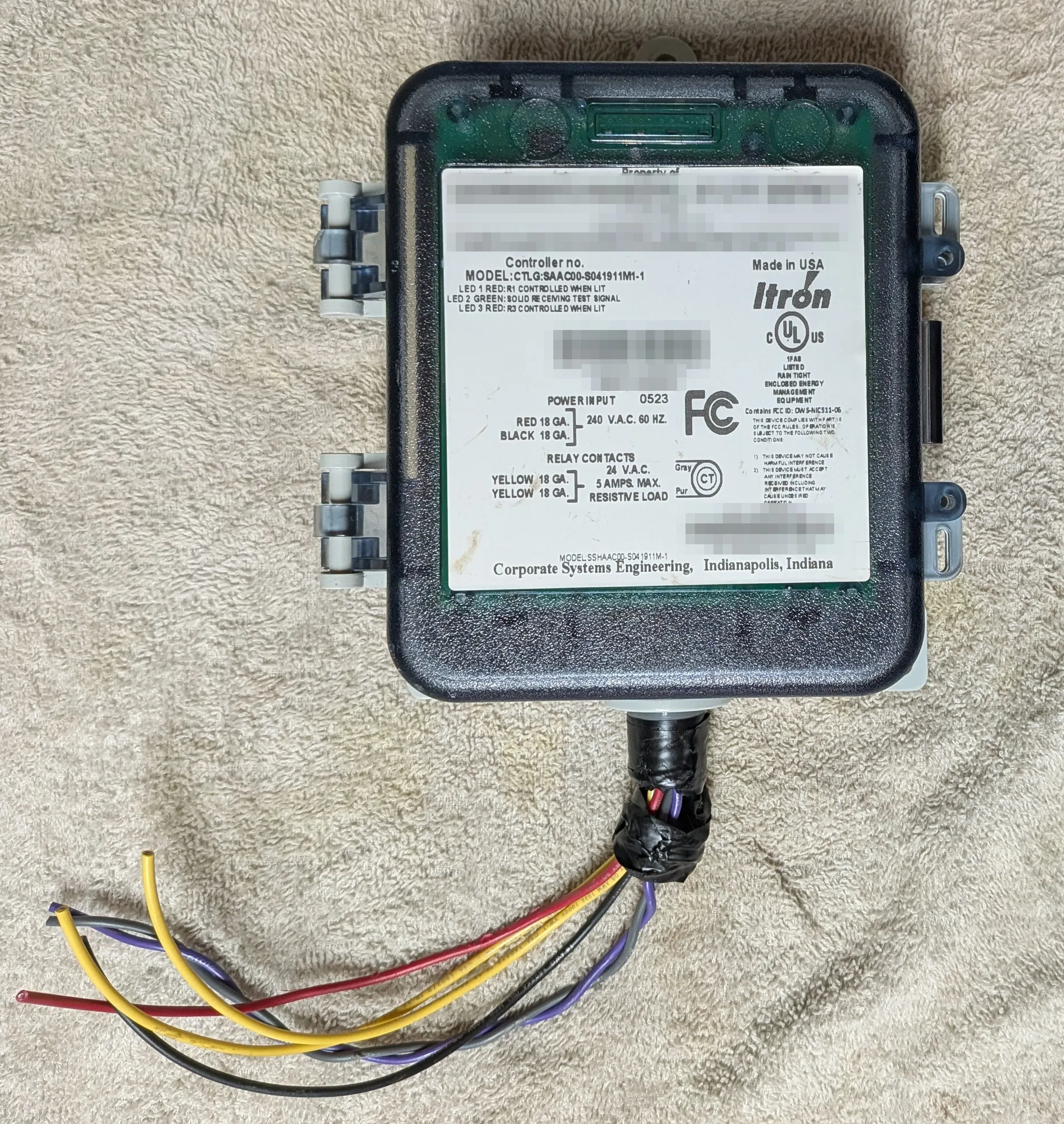
The Corporate Systems Engineering SSHAAC00-S041911 is one such device.
As you might expect from a single purpose device, the internals are pretty straightforward. There is a modem/radio side to communicate with the utility, and a power switching side to understand and control the load.
This unit fell into my hands after it was taken off an air conditioner during a service call.
A bit counter intuitively, the entire assembly is attached to the lid of the enclosure and not the main body. This will start to make more sense when looking at a few other details below.
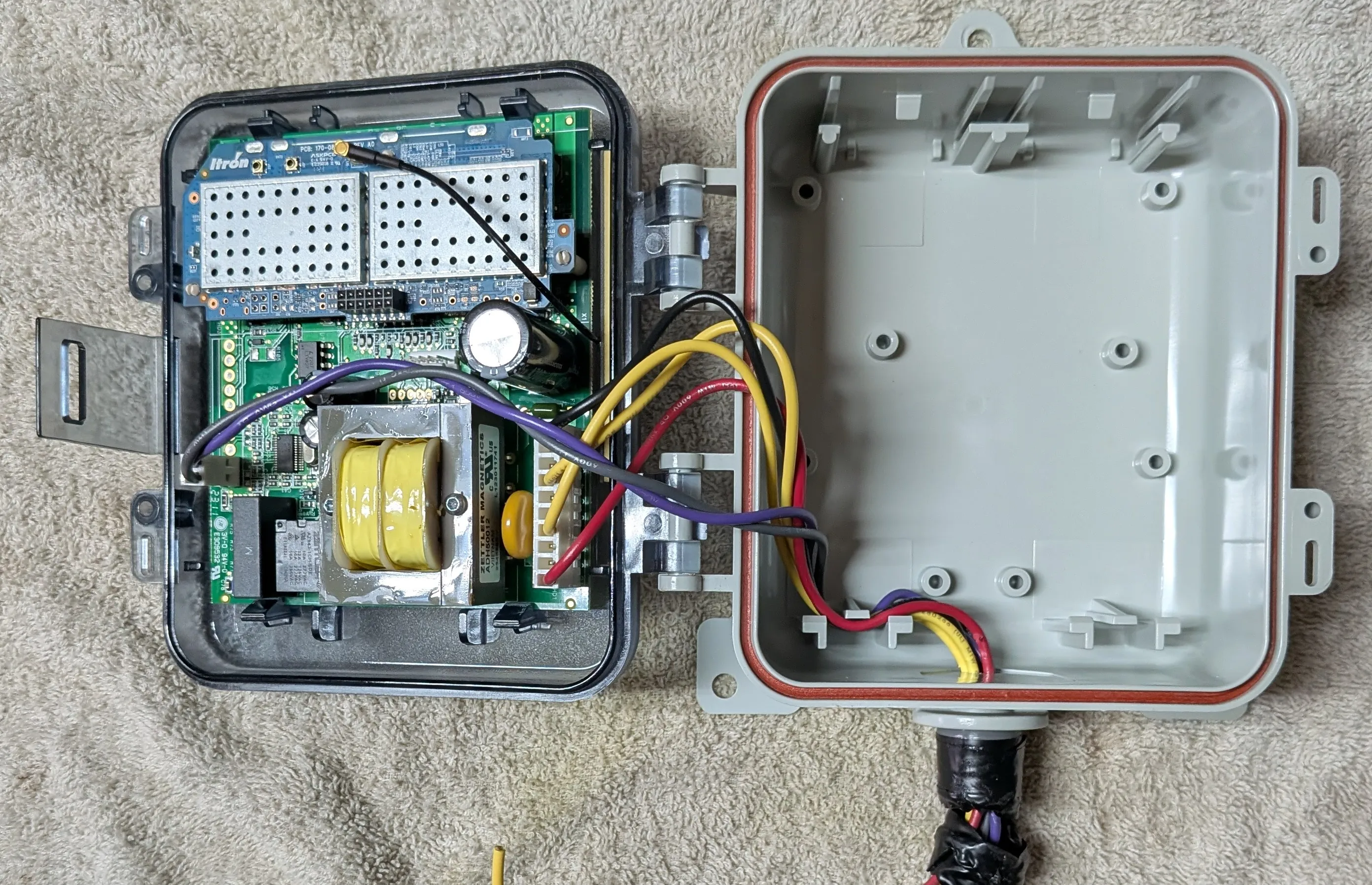
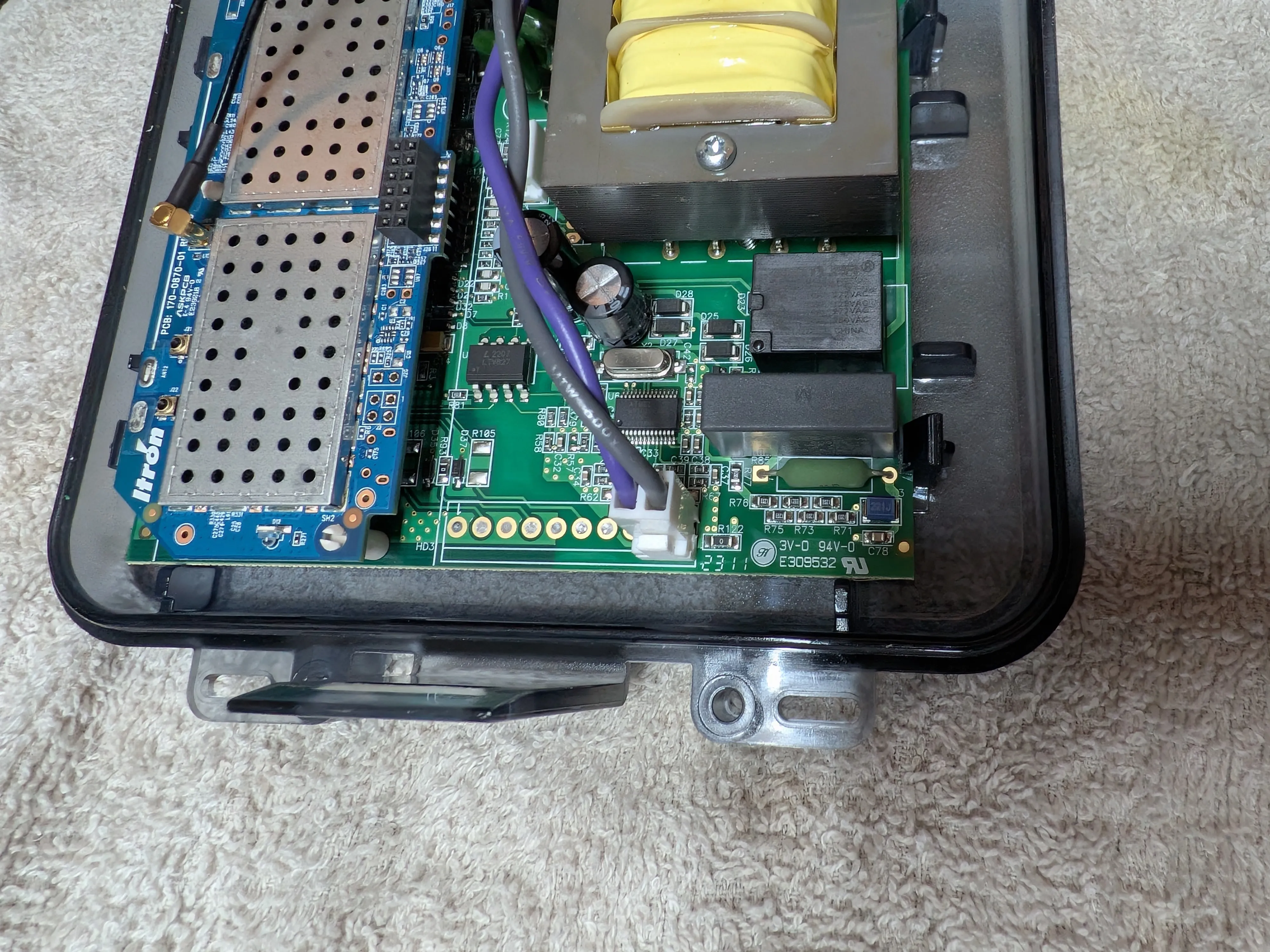
The purple and grey wires ran off to a CT clamp that was installed around one of the AC compressor lines.
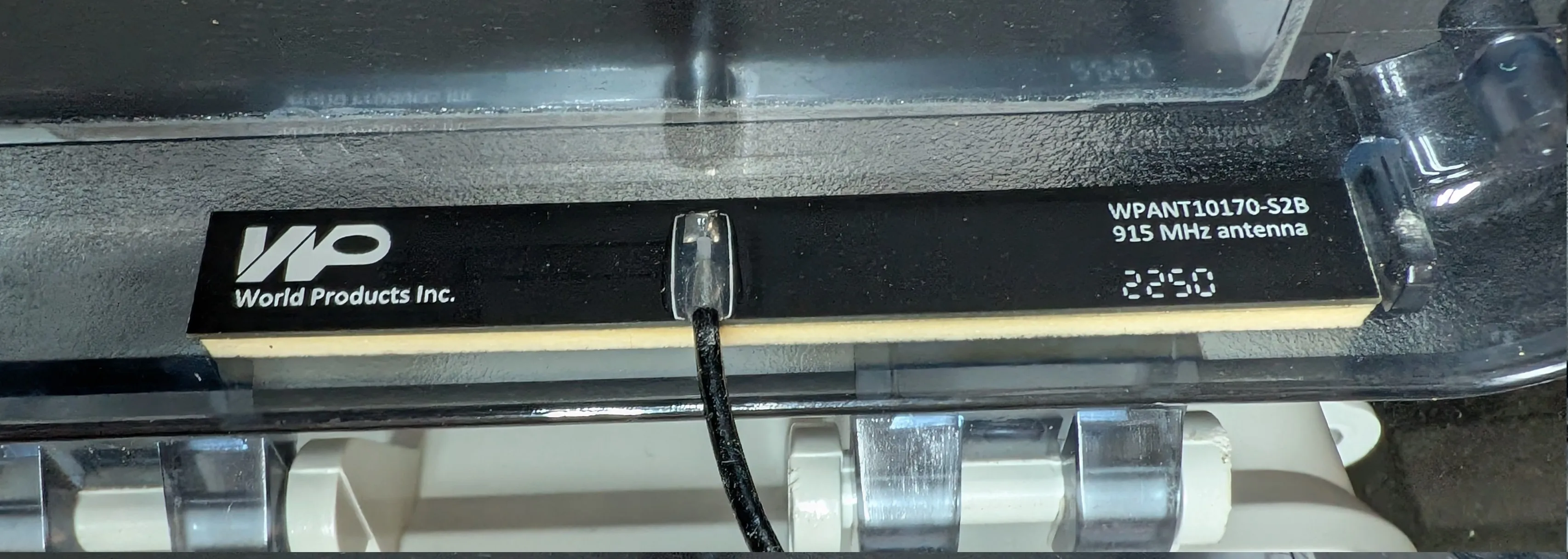
Small patch style antenna (WPANT10170-S2B) for the radio attached to the side of the ’lid’ with a sticky pad.
Taking a closer look at the main PCB and going in no particular order.
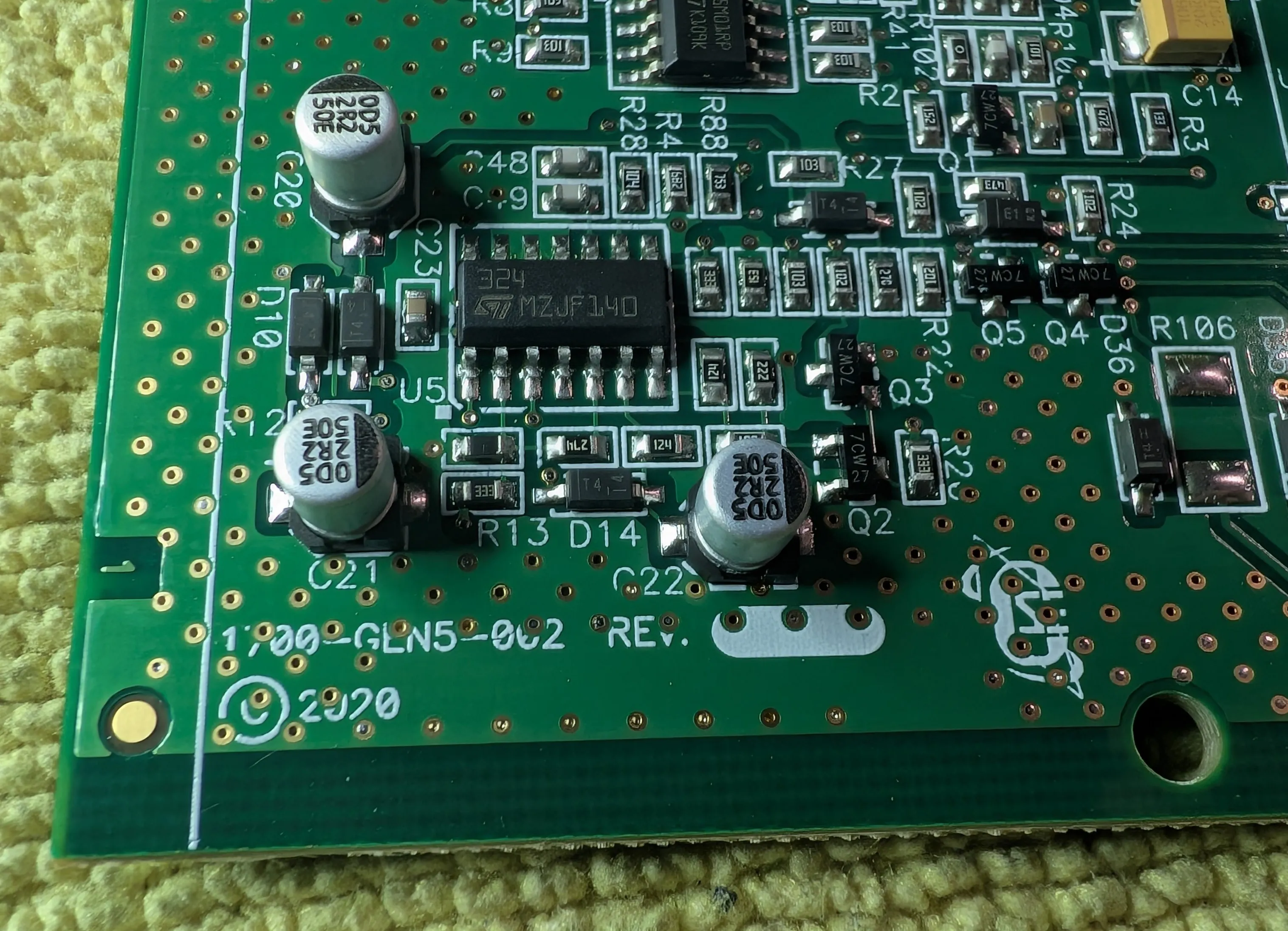
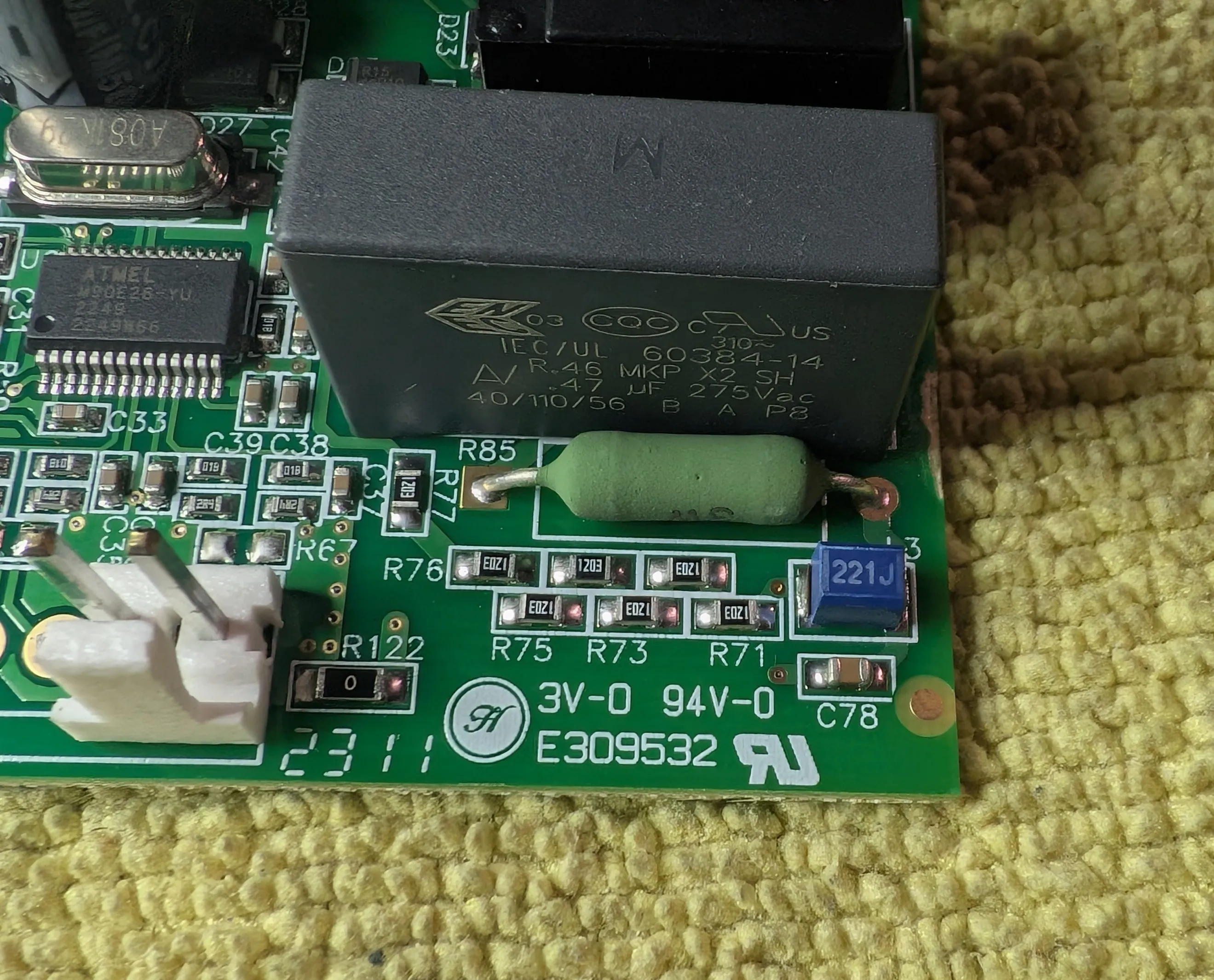
The PCB has cutouts for a few different LEDs, not all are populated in this unit.
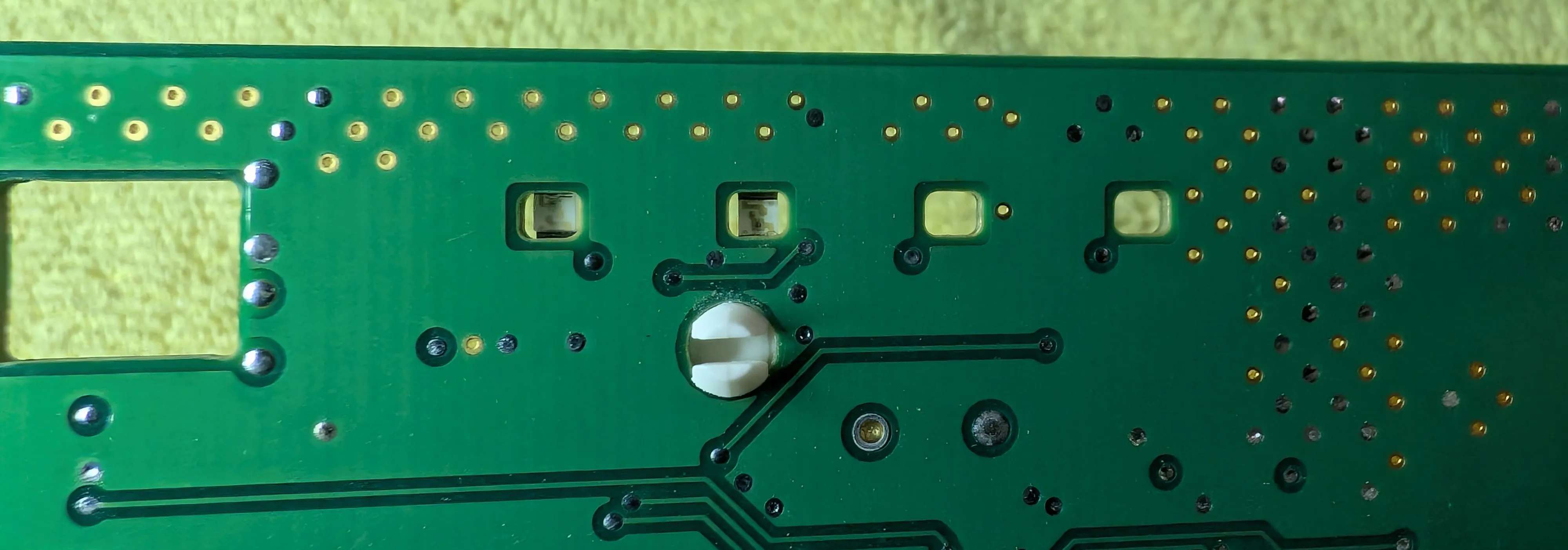
LEDs face 'down' to shine through the cutouts in the PCB and the lid.
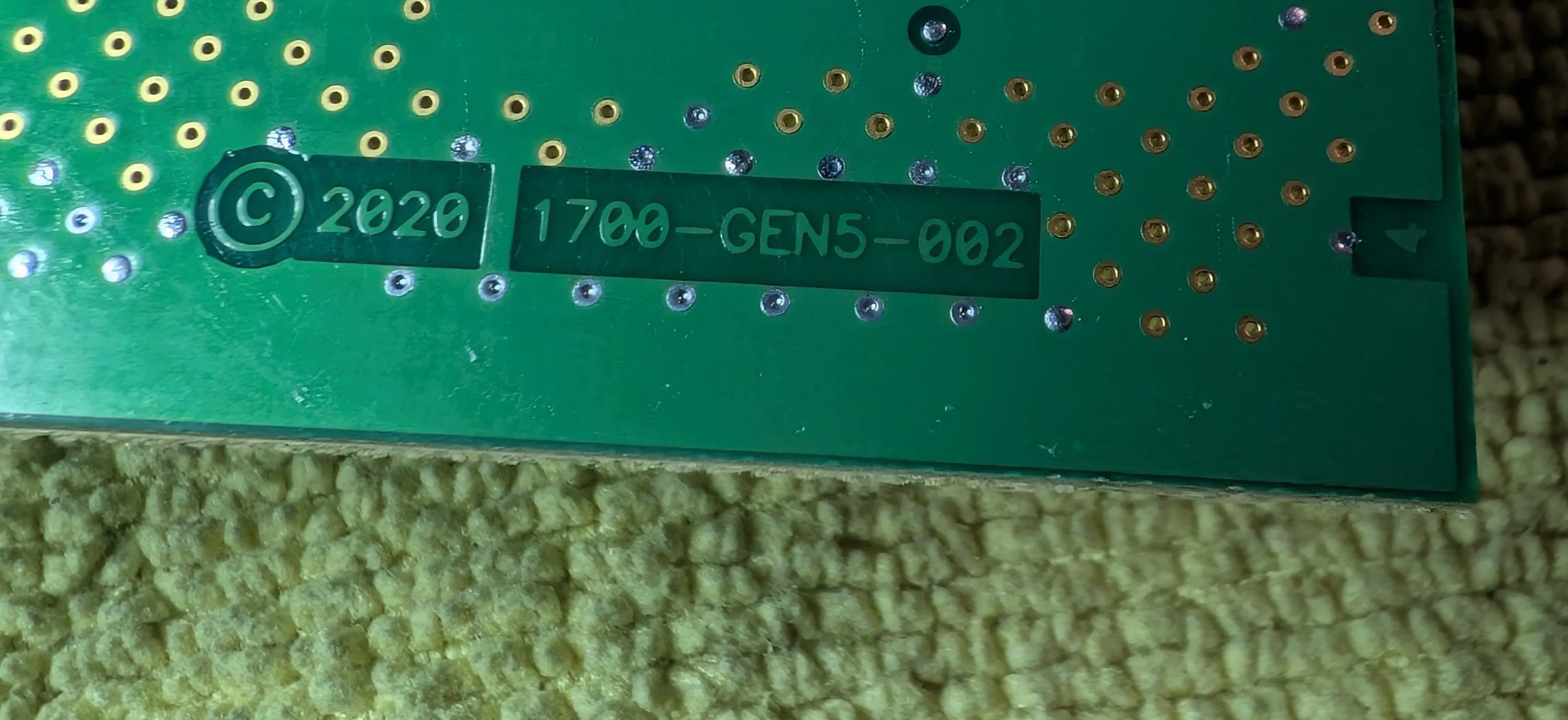
Layer indicator on the right is a nice touch.
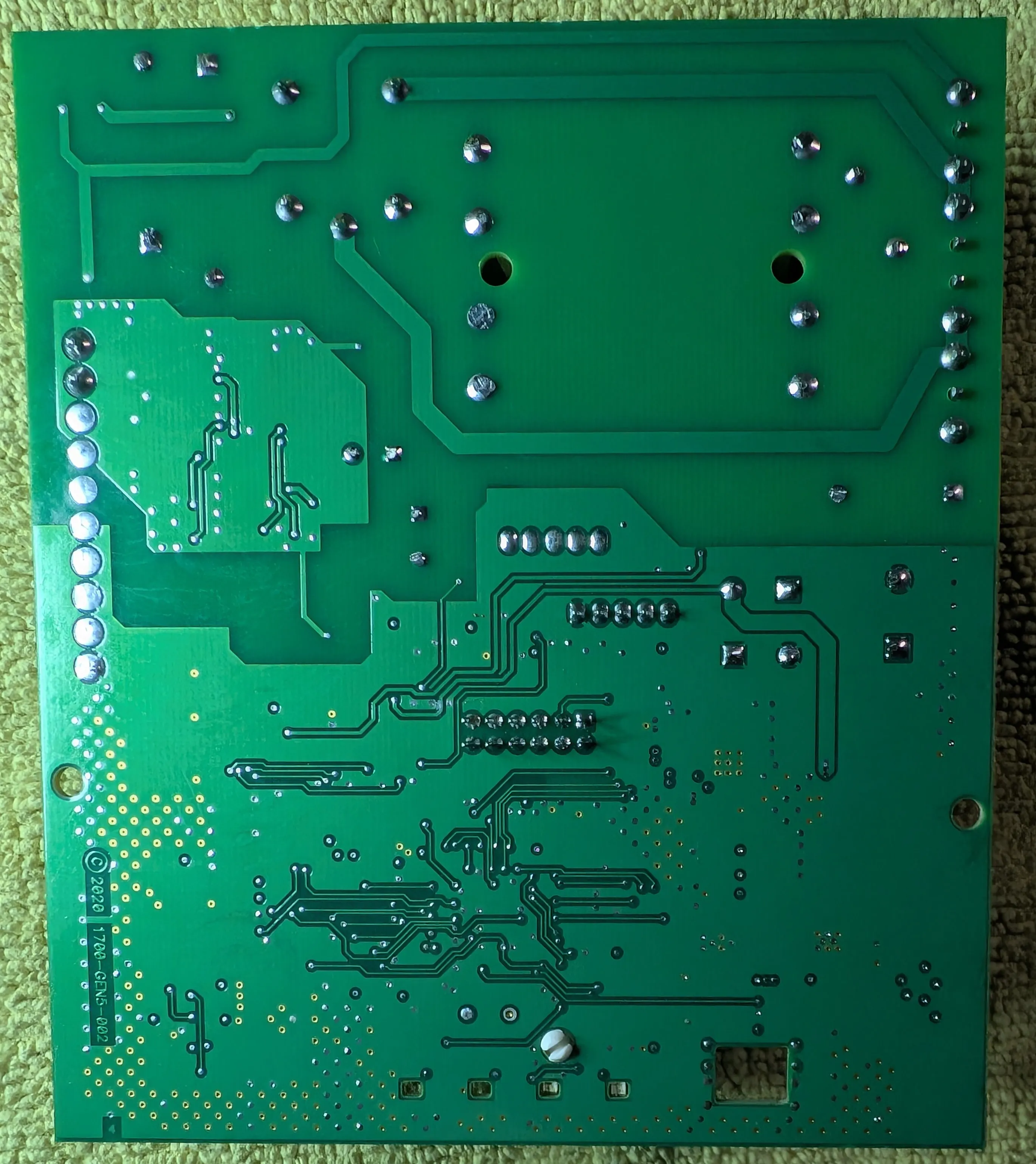
There really isn’t much to see on the bottom of the main PCB. Big traces for the mains side of things, lots of clearance around everything else and a lot of ground plane stapling/via-stitching on the low voltage side of things.
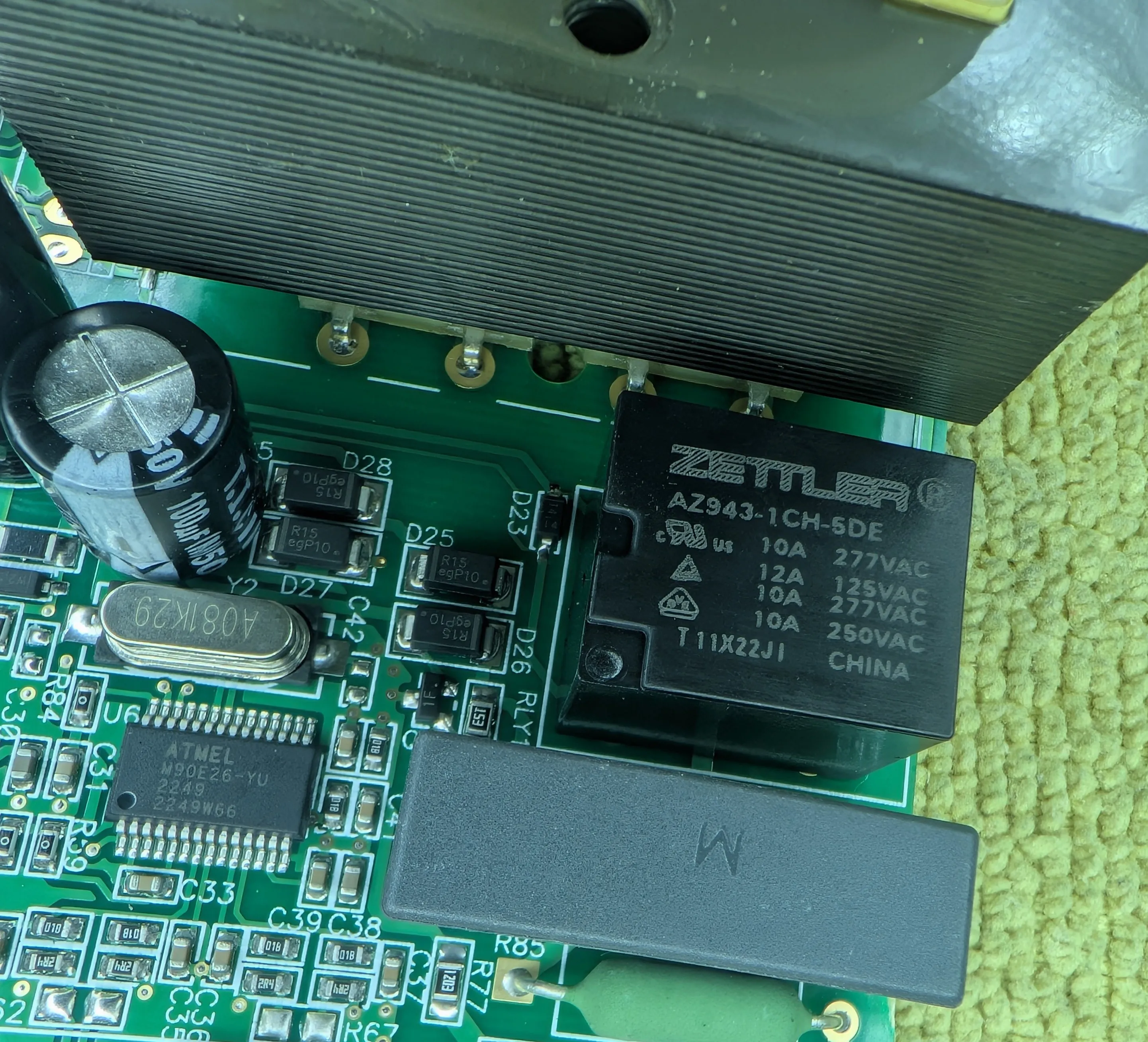
Both the transformer and the single relay are Zettler parts.
The caps are Nichicon.
No expense spared it seems!
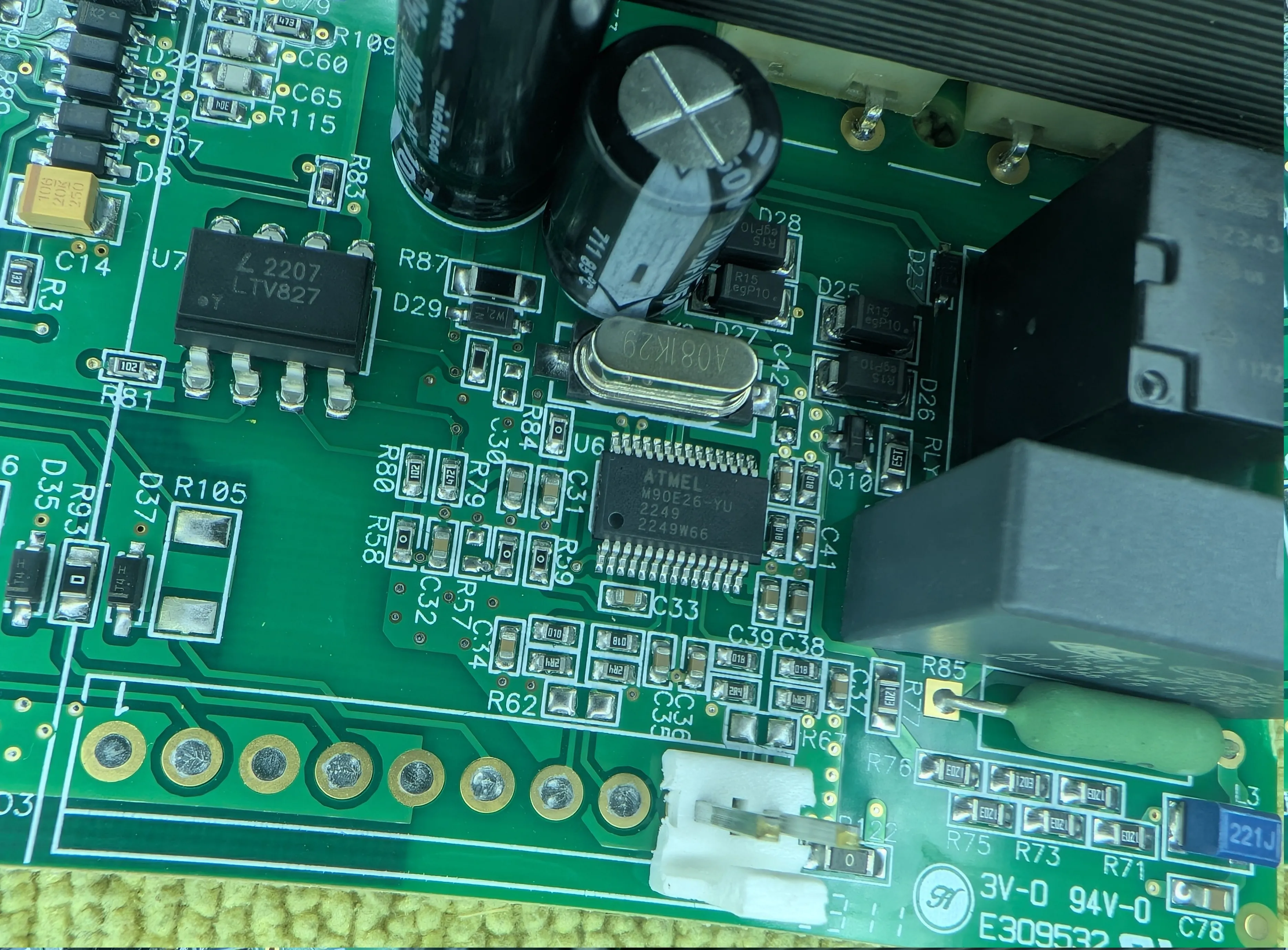
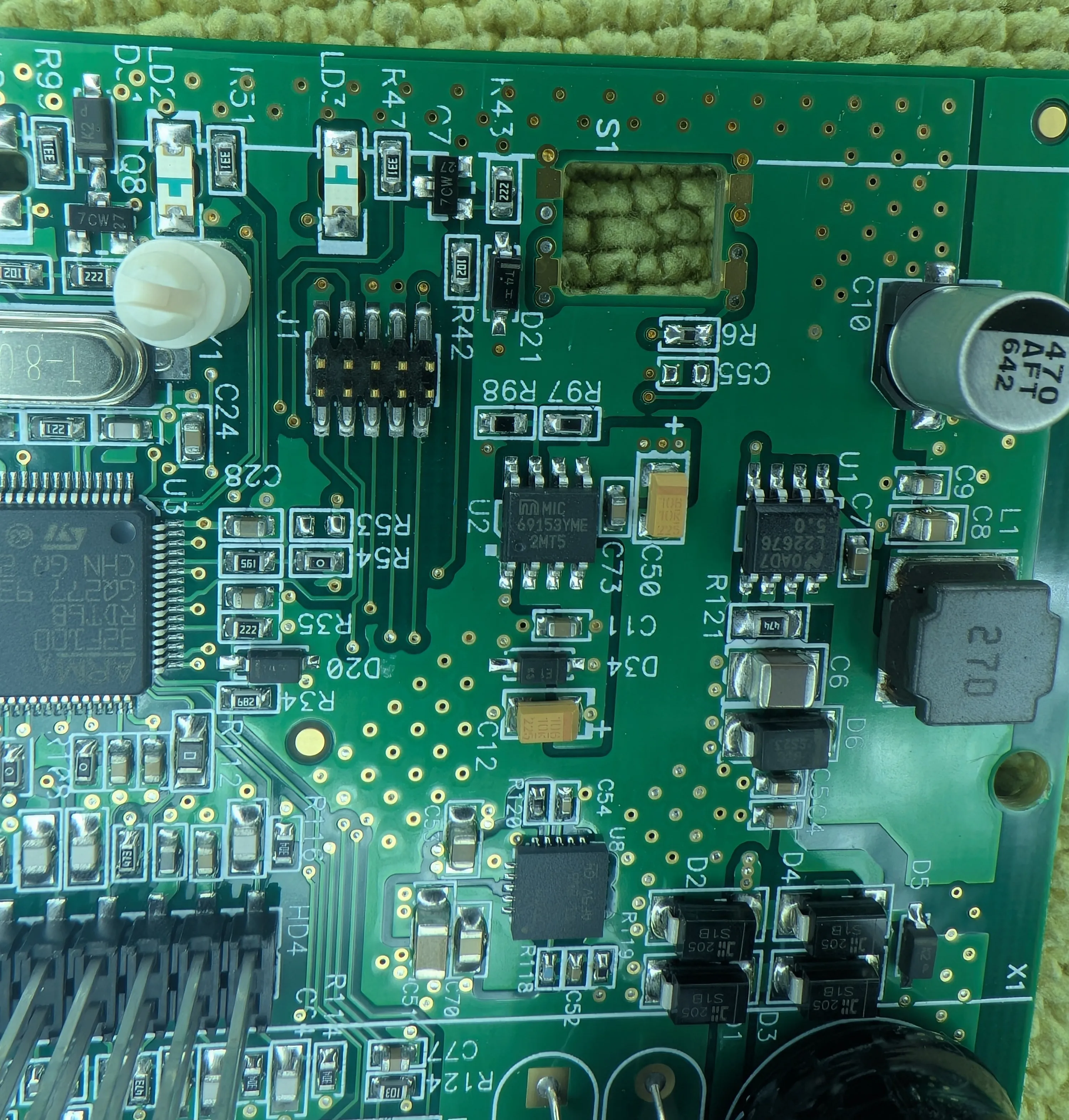
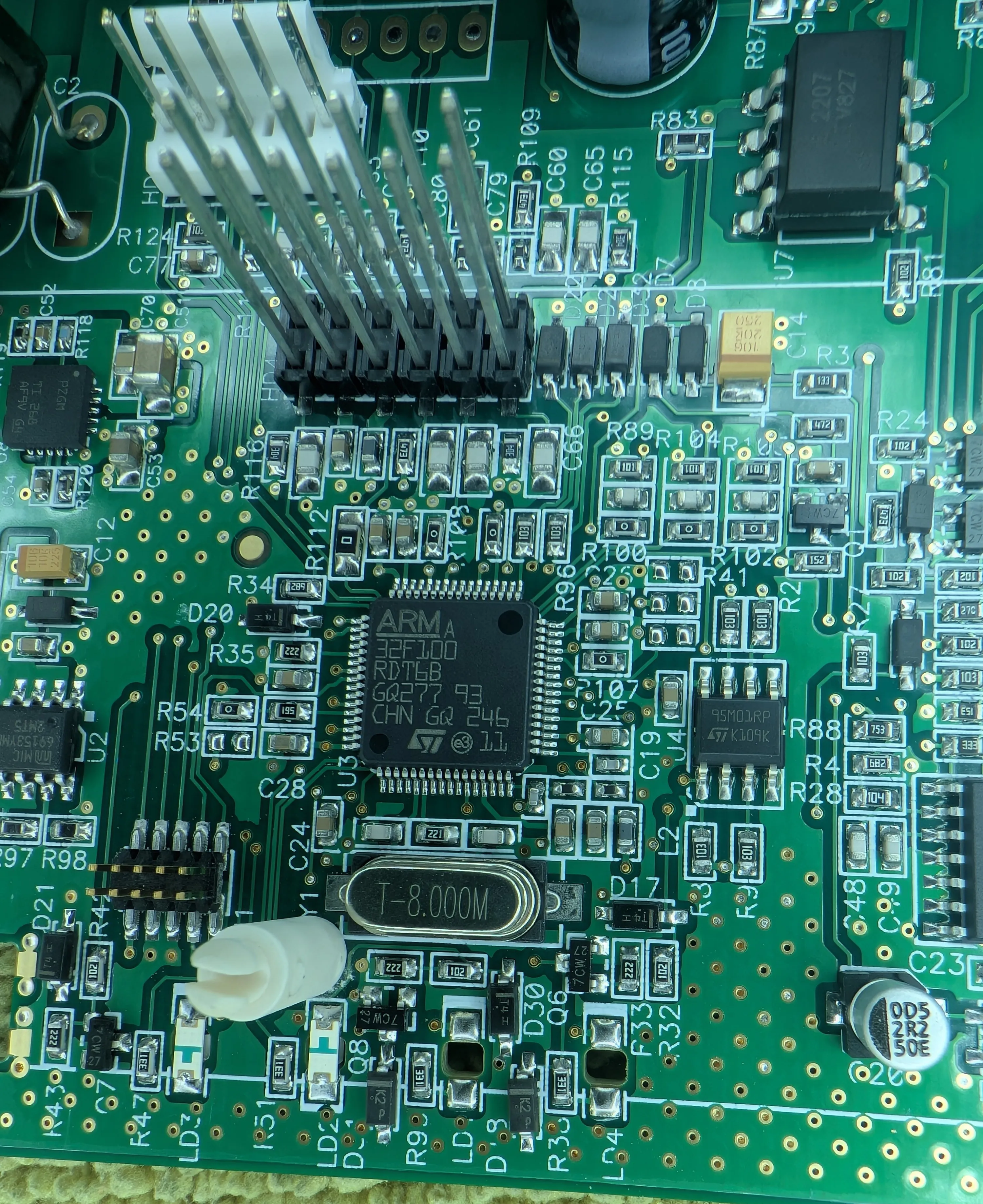
The ARM seems to do house keeping… although it’s probably overkill for what this device needs to do. The ’tall’ pin headers are where the modem module mates.
Speaking of the modem module…
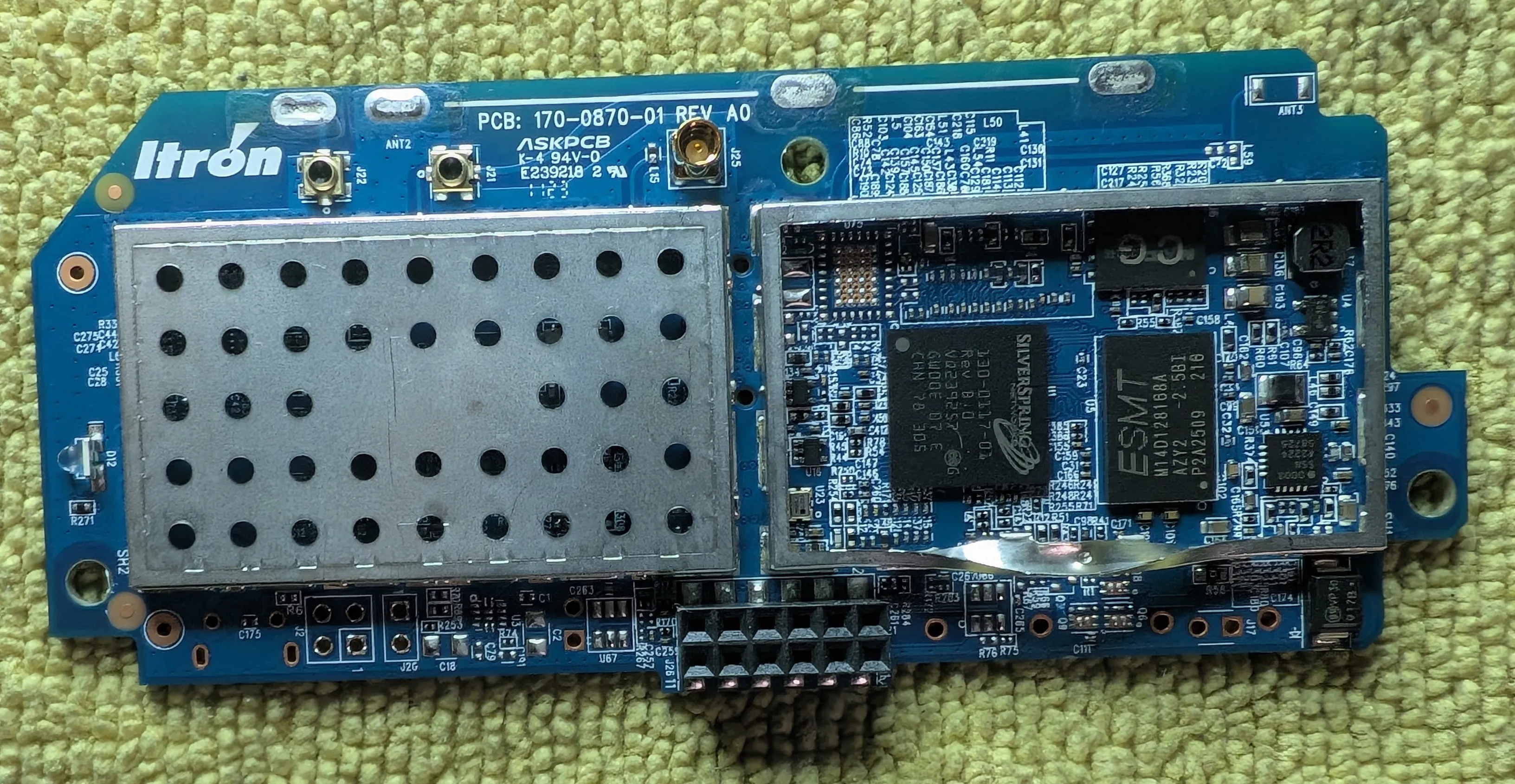
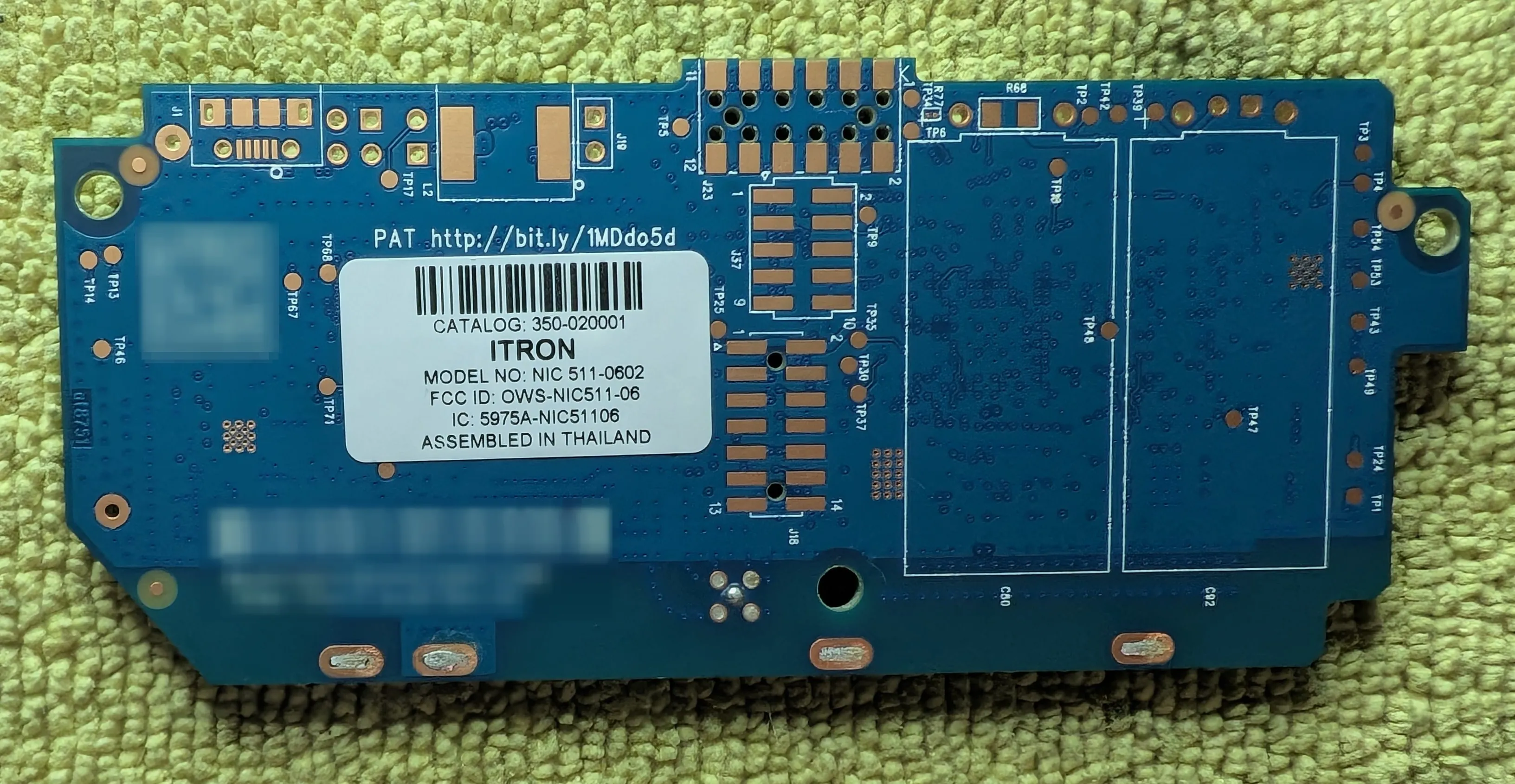
The 2x8 pin header (center, bottom) mates to the main PCB.
ICs
In - roughly - the order they appear in the photos above.
Power
| |
The LM324 quad op-amp. For what, exactly, I’m not sure.
| |
The M90E26 is a very accurate single phase energy metering IC.
| |
AZ943-1CH is the ‘dry contract’ wired in series with the thermostat to switch the AC compressor on/off.
| |
Lite-On LTV-827 optoisolator. This is almost certainly for isolating the M90E26 from the rest of the low voltage side of things.
| |
Microchip MIC69153 is power conditioning for the housekeeping MCU.
| |
Texas Instruments LM22676 is power supply for the low voltage side of things.
| |
ST STM32F is the main housekeeping MCU.
| |
ST M95M01 is flash memory for the MCU.
| |
Texas Instruments TPS7A8300 is another power conditioning IC.
Modem
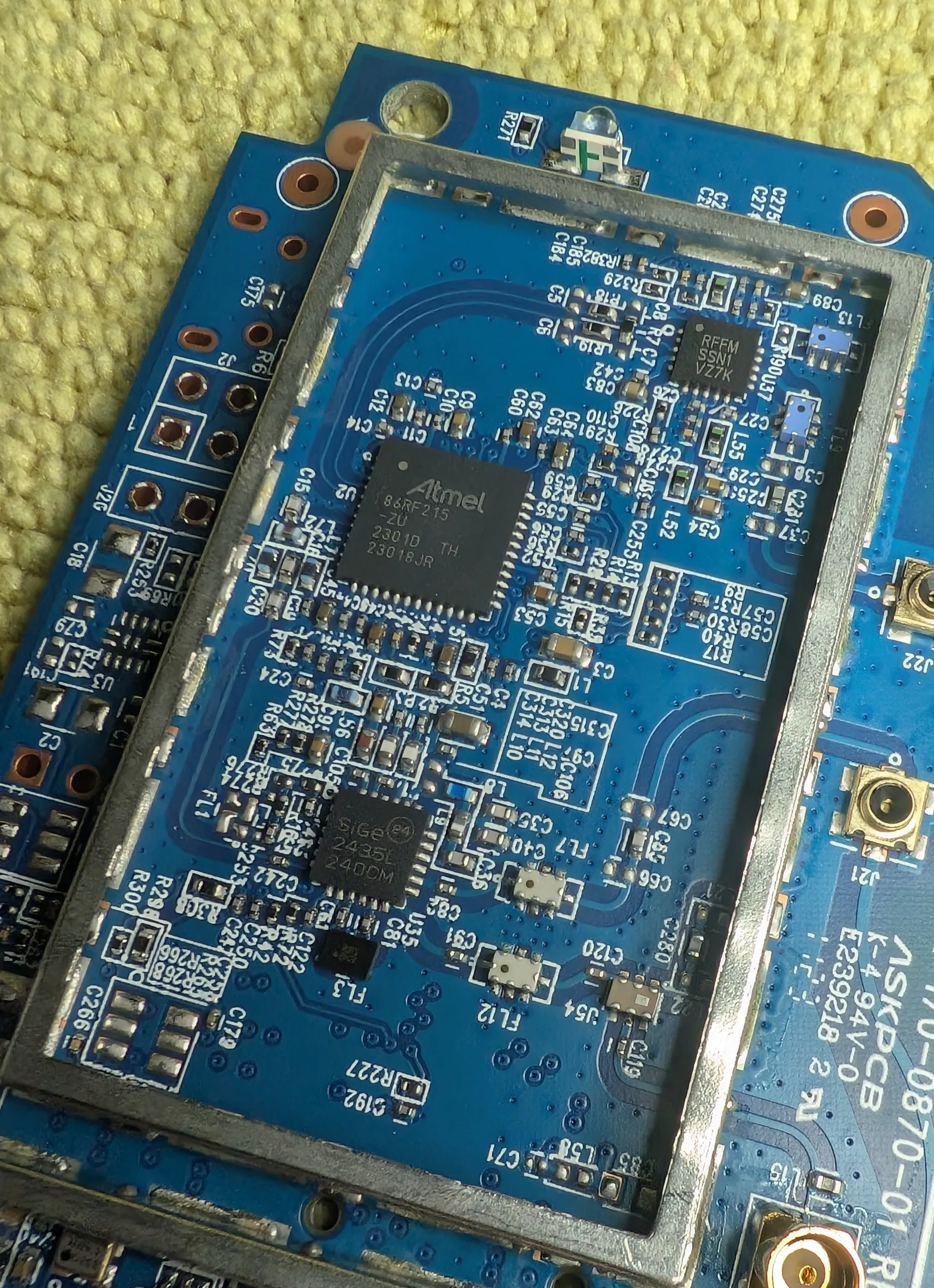
The modem module appears to be Itron OWS-NIC511-06.
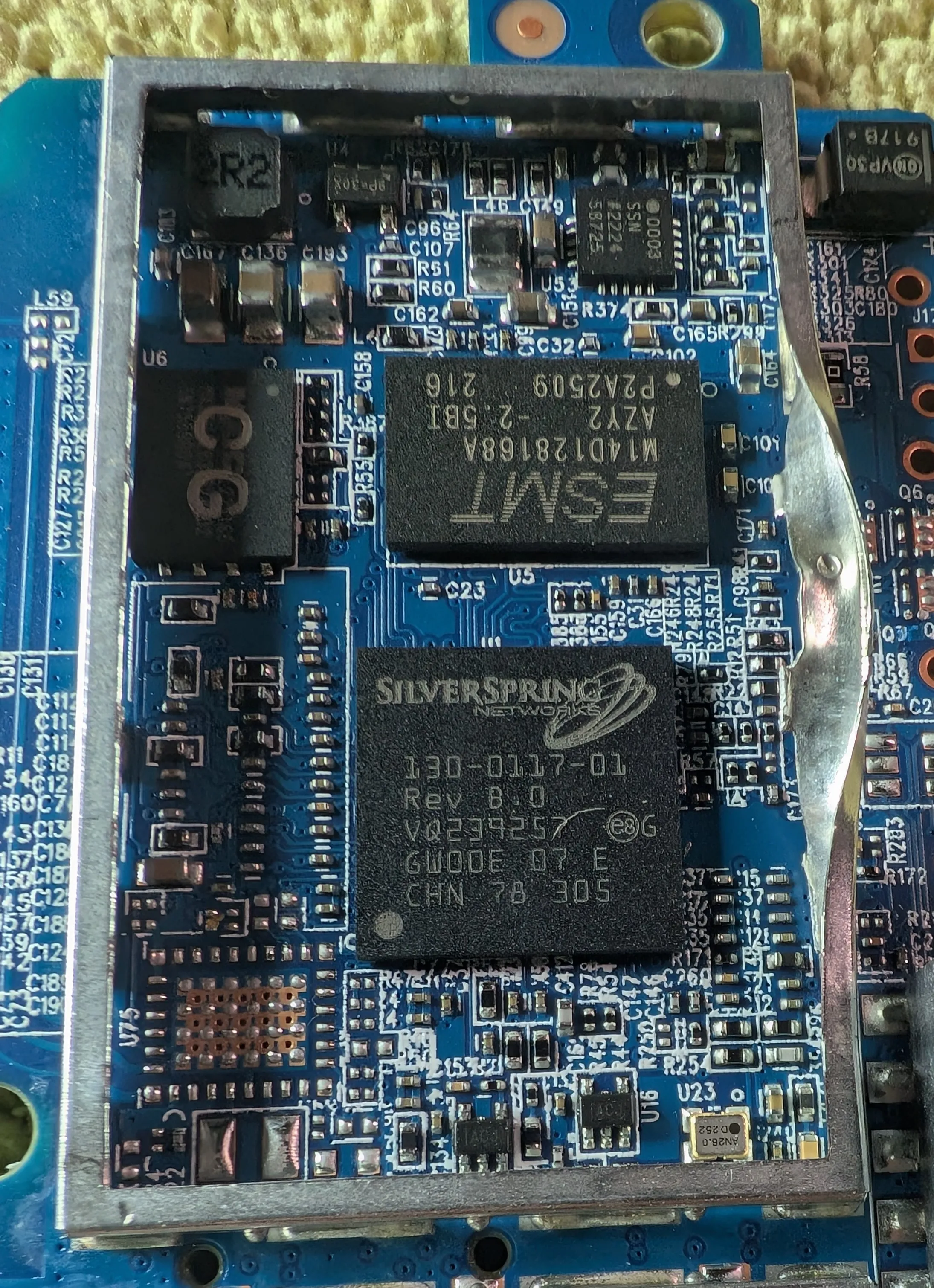
As far as I can tell, Itron acquired Silver Spring Networks who originally developed the module.
The PCB has quite a few unpopulated footprints and design features; each customer/region(?) gets a slightly different configuration based on their needs.
At least in this configuration, it uses 915MHz ISM band and a mesh technology that Itron calls OpenWay.
I’ll defer you to the excellent work of @RECESSIM for some details on smart meters and mesh networks.
| |
Appears to be “endpoint security module”.
| |
| |
I can’t find anything definitive on this one but it’s clearly a front end module for the RF side of things.
| |
Atmel AT86RF215 Sub-GHz / 2.4GHz Transceiver and I/Q Radio
| |
SkyWorks SE2435L is a power amplifier for the 902-928MHz ISM band.